







With the FIFA World Cup trophy tour having already having passed through the continent, President of the South African Football Association (SAFA) Dr Danny Jordaan, says the future of women’s football looks very bright.
He was speaking at a gala dinner held to welcome the FIFA delegation that had brought the trophy to South Africa.
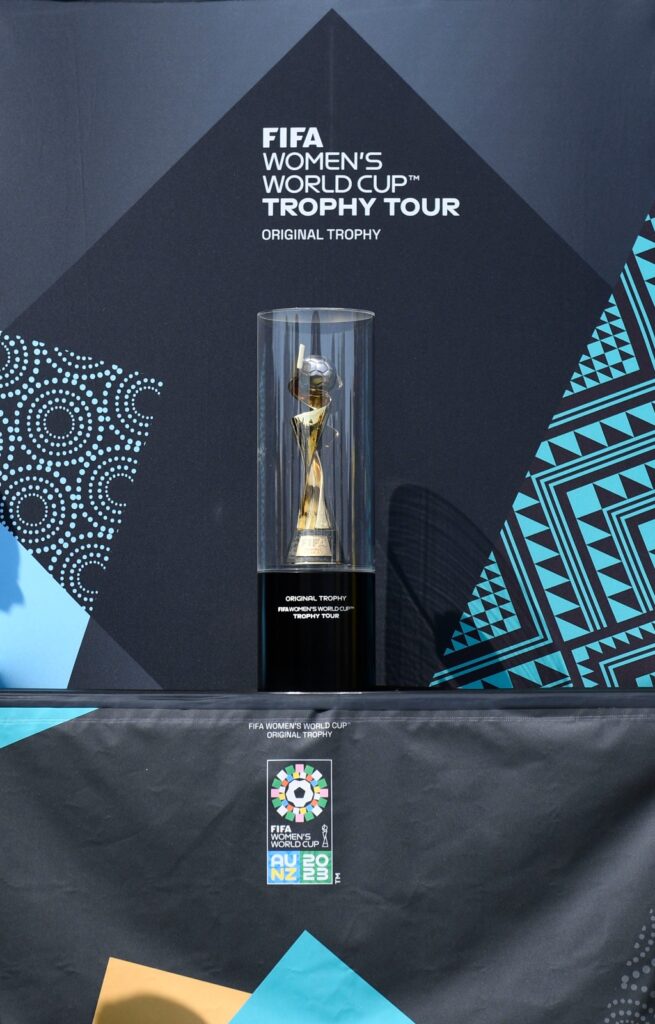
The prized item was placed and unveiled at Shapa Soweto in Klipspruit/Pimville and at the Chris Hani Mall in Vosloorus, where fans had a chance to take pictures next to it.
Present during the two-day event were MEC for Sports, Arts and Culture in Gauteng, the Honourable Morakane Mosupyoe, Jessica Motaung-CAF Organising Committee for Women Football Standing Committee and Kaizer Chiefs Marketing Director, SAFA COO Lydia Monyepao as well as Phil Mogodi-SAFA Johannesburg President.
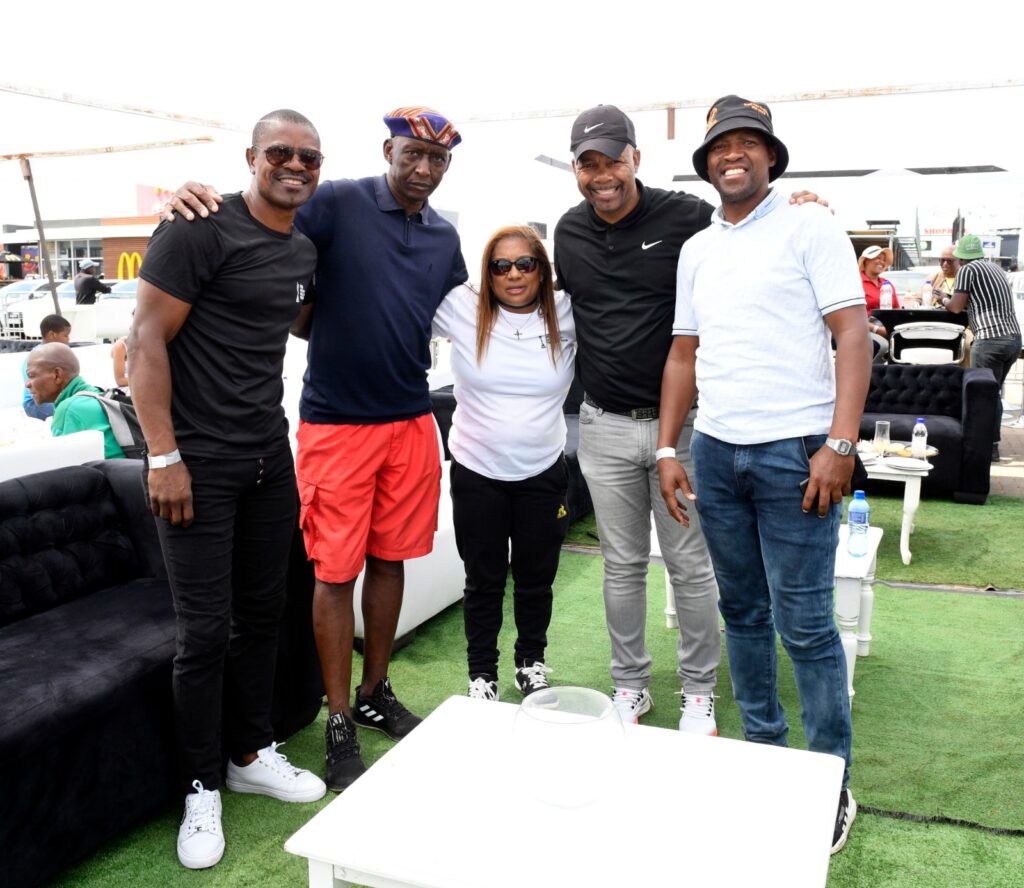
Also in attendance were, among others, former players Teboho Moloi, Teboho Mokoena, Bashin Mahlangu, Lucky Lekgwathi, Aaron Mokoena, Desiree Ellis, Simphiwe Dludlu, Maud Khumalo, Jabulile Baloyi, Nomathemba Ntsibande and current Banyana Banyana players like Bambanani Mbane, Andile Dlamini, Lelona Daweti and Lebogang Ramalepe.
Travelling with the trophy was FIFA ambassador Saskia Webber, former goalkeeper of the US Women’s National team. All the qualified countries will get a chance to have the trophy on their shores before the start of the tournament from 20 July to 20 August.
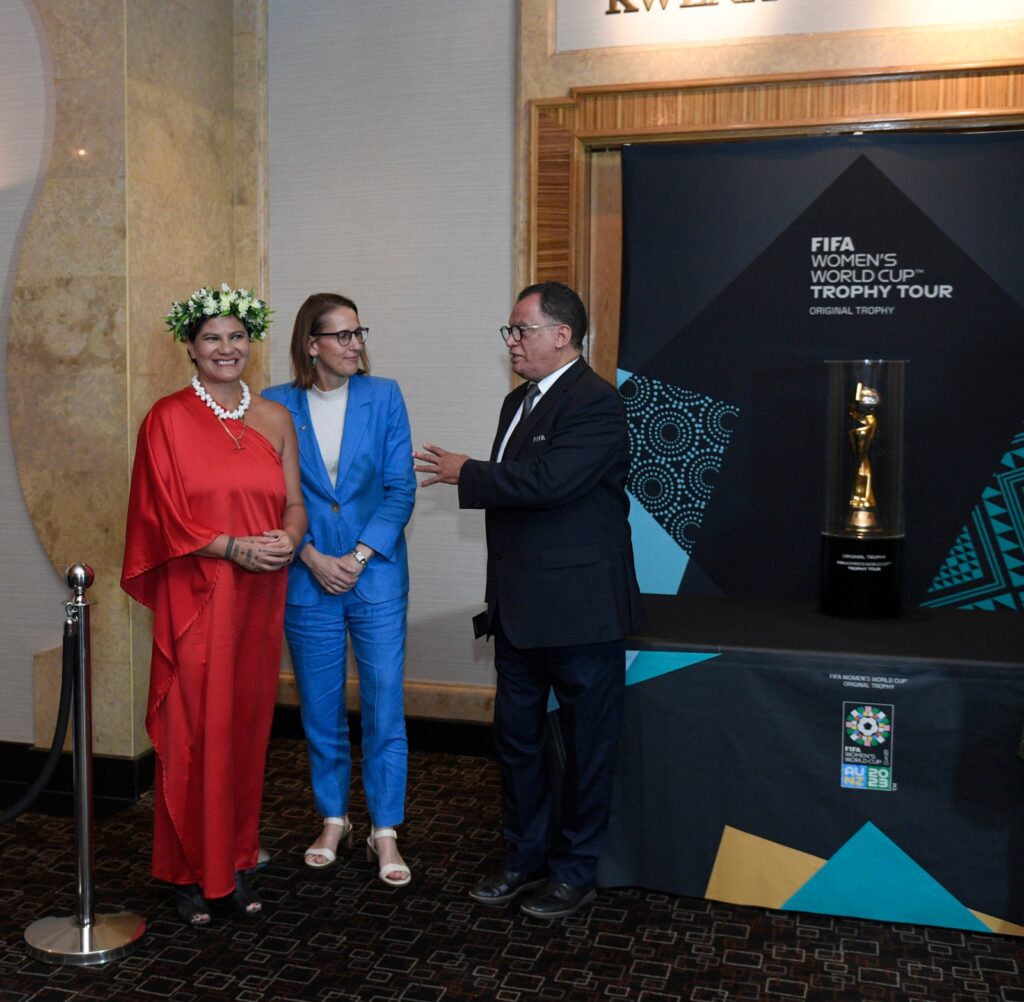
At the gala dinner, SAFA hosted the High Commissioners of Australia – Ms Tegan Brink, and New Zealand – Dr Emma Dunlop-Bennett. The two countries will co-host the 2023 FIFA Women’s World Cup which will, for the first time ever, feature 32 teams – increased from 24.
Banyana Banyana have been drawn in Group G and will be based in New Zealand – they will face Sweden, Italy and Argentina.
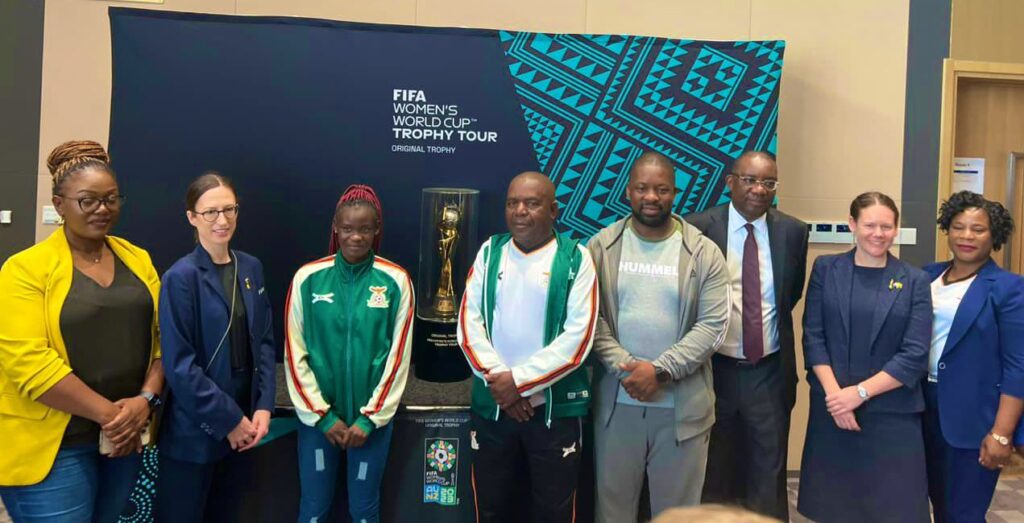
South Africa, Nigeria, Morocco, and Zambia are the four representatives of the African continent.
The trophy tour started off in Japan, and passed through Africa, en route to South America – Brazil (29-30 March), Argentina (1 April) and Colombia (3 April) before making its way to Central America.
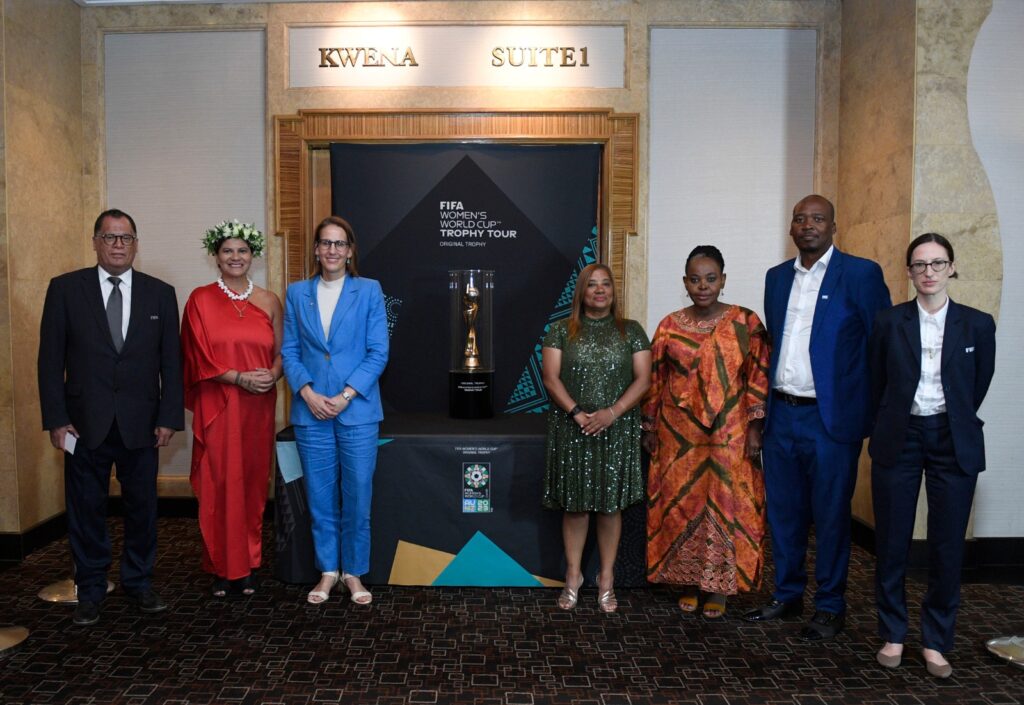
Here is the speech of SAFA President Dr Danny Jordaan at the Gala Dinner:
When I was in New Zealand, they were not talking about New Zealand. They were talking about Aotearoa. So, I am also not talking about New Zealand, I see the High Commissioner is still talking about New Zealand/Aotearoa – so I’m leaving New Zealand out – go back to your roots and talk about Aotearoa.
We also have the High Commissioner from Australia Madam Tegan Brink – and you know Brink is an Afrikaans name and ‘sy kan baie goed Afrikaans praat, ek week nie of julle weet nie’ but what you may not know is that Australia and New Zealand – my neighbours immigrated to Australia. Many South Africans, if you go to Adelaide, I walked in the streets of Adelaide, and they were speaking Afrikaans. They have boerewors there, and all those things, so South Africa has taken part of our population to those two countries Australia and New Zealand. So, we have real links, but also, we have sporting links with Australia and New Zealand. You know there was a time when we supported New Zealand against the Springboks – we are not doing that anymore, you are on your own now. And we even beat you in the World Cup, we are the (Rugby) World Cup champions, you must not forget that. And, with Australia – long historical ties, and it’s just wonderful to have both of you here tonight because you are hosting the whole world, including our team. So very important for us that the two host countries are represented here today. It’s also important that FIFA is represented here today, that the trophy is here, that the coach of Banyana Banyana is here – so all the components of the World Cup are present in this hall.
We also have Hollywoodbets here – this has been a very important part of woman’s football. The SABC is also here, Sasol is not here but these are all our partners. We also have SAFA represented here, the vice-president Linda Zwane is here, the CEO of SAFA Advocate Tebogo Motlanthe is here, we have NEC members Job Mchunu, Buddha Mathathe, and we are happy they are here.
But tonight is really a celebration that all the components of the World Cup are together. What we want as South African football is really to understand that this World Cup (2023) will single-handedly put women’s football on par with men’s football, in all respects.
If men’s football is broadcast five days a week, then women’s football must be on our television five days a week; if there is a magazine show for men’s football there must be a magazine show for woman’s football; if we know all the names of the Banyana Banyana players, then we must know all the names of Bafana Bafana players.
And it’s the same thing that we raised with FIFA in Kigali (73rd FIFA Congress) – that if there is a Messi and a Ronaldo known throughout the world, where is a Ronaldo and a Messi of women’s football? Why is Megan Rapinoe, who has the guts, the backbone, the audacity to take her own team, her own association to court, to force the Supreme Court in the United States to agree on pay parity? And that has transformed the whole basis on how women’s football was viewed.
So, there is pay parity now.
FIFA has now agreed that the prize money will be the same: if they pay France 40 million for winning the World Cup then they must pay the woman 40 million for winning the World Cup. Now, when France won in 1998, they paid France 40 million (US dollars), the United States won the World Cup for women, and they paid the women 4 million (US dollars) – that’s the end of that story.
So, this World Cup (2023) will show 32 teams, and move closer to pay parity – same prize money!
And certainly the World Cup in 2027 there must not be an issue. There must be pay parity, equal prize money, greater television penetration. We must have focus on women players. Thembi Kgatlana (Racing Louisville and Banyana Banyana forward) is bigger in Spain than in South Africa. Go to Spain and walk in the streets, mention the name of Thembi Kgatlana, people in our country don’t know her. Go to Italy, go to AC Milan, talk about Refiloe Jane (Banyana Banyana co-captain) who was the first South African to play for AC Milan. Go talk to them about Refiloe Jane, people just know the name, nothing else. It’s not just our own country, it’s the whole continent and the whole world, same problem, that we do not put more time behind women footballers. And we must correct it – if we want to be taken seriously as a bidding country, the one thing that we must fix is the number of matches of women on our television screens, and also the profile of our players so that every South African can understand. I don’t even know that other than Desiree Ellis being coach, what more can you tell me about her ? We don’t know! Oh she’s a Banyana Banyana coach, and what else? Did she play? Was she a captain of Banyana Banyana? What more can you tell us? We must do more work, and the media is here – I’m giving you homework because we need you as a partner when we run our bid that there must be content; the substance of women’s football in our country must be out there because they must tell the story I can’t tell the story for them.
Siya Kolisi’s (Springbok Rugby captain) show is all over.
Name one footballer with similar exposure – and why not? We must address this issue and be serious, and not just say ‘wa thint’abafazi’ and we are all happy and then we go on with our lives. We must translate it into real action so that when we celebrate the World Cup, if we are fortunate in 2027 in our own country, that we will have the same kind of response that we had for the 2010 World Cup in our country. And Bafana Bafana was not even a factor in that World Cup (2010) – they were number 80 in the world when we hosted the World Cup. And yet, people were excited – the team was not going to win the World Cup, and we knew it, but they were excited. They had Football Fridays, they had their jerseys on. (Siphiwe) Tshabalala just scored one goal, we are still celebrating that one goal.
Banyana Banyana are the African champions, no many put on a jersey to welcome Banyana Banyana – a few here and there, there was not the mass hysteria like for Tshabalala’s goal. They (Banyana Banyana) had a great performance, they are the African champions and are going to the World Cup for the second time, let us celebrate ‘abafazi,’ let’s celebrate their achievements, let’s recognize the special contribution to the transformation of our country, and the World Cup must accelerate the transformation of our country, including economic financial transformation. And the one thing that we would be happy with before we host that World Cup, is that women footballers in our country be able to go and play football and go home, at the end of the month have enough money to feed themselves and their family and they don’t have to work full time somewhere else, and be part time footballers – full time women’s football in our country.
Those there are things that we want to achieve, and we can, it’s just that they always say no but the market… the market pays, for a two-day competition on the men’s side 70 million, just for four matches. But the market cannot get those figures for a whole season for women’s competition. So, we also talk to the market – I don’t know what the name of the market is, but it seems the market is male. So, we must transform the market also so that the market can respond better to women’s football.
But tonight, we are happy, we want to thank FIFA for bringing the trophy here. They still have other countries to go to, but it has brought so much joy and excitement and when I saw those kids from primary schools, those girls, jumping and saying we want to play for Banyana Banyana, it is the kind of thing that we have to give the youth of our country – ambition, a goal or a hope for the future because we are getting demoralized way too much in our country and when you are demoralized in darkness, it is even worse. So, hoping that the lights will stay on and that the lights for the future will also be bright.
I want the FIFA delegation just to come here that we can officially thank them. On behalf of all of us, take our message to President (Gianni) Infantino – and by the way President Infantino was re-elected by acclamation, there was no opposition or any other candidate, he was unopposed, and we are happy that for the next four years he has committed to invest $1 billion in women’s football.
So, women’s football is a different game, forget about what you experienced in the past, it’s going to be a different ball game, greater investment in women’s football. We will, with whatever money we receive, also invest in women’s football because women’s football will transform our society. The despair and hopelessness, the unemployment in our country, do you know who is going to change it? The trick is in the family, which family member can bring hope and transform the family – it is a woman player. I can tell you from personal experience.
We gave Banyana Banyana R400,000 and some other people gave them some money too, ask them what did they do. Did they buy a Bentley, no! Did they go to Gucci, no! They bought houses for their family, they bought cars for their fathers. And then you listen to their stories – one said I had a one room house and now I have eight rooms, each one of us has got their own room because we always lived in one room. And they said you know what president, I now have money to buy furniture for all those eight rooms – that is real transformation!
Let us give the women the money because they won’t abuse it, they’ll help to build the society and bring hope, otherwise if we don’t give them, we will have shut down, and more shutdowns and showdowns. Let us use women’s football to transform our society so by the time we host the World Cup (2027), we live in a different country, a country of hope, a country of equality between men and women, not just in words but in action, in financial terms, in recognizing that they are the change agents.
So, I want to thank FIFA because they also understand this message, not just in our country – in South America it is the same, Africa it is the same – women are oppressed, but football will liberate them. So, we want you to take the message that we are very happy that you brought the World Cup trophy here. Who’s going to touch the World Cup (trophy) is really Desiree Ellis’ business, it’s not my business.
Desiree must accept the World Cup on our behalf.
But in 2027 we are going to be in the final, that we can give you a guarantee. So please convey on behalf of all of us, our best wishes to FIFA for your further travels to the other countries, and I hope that the same excitement will be enjoyed wherever you take the trophy. This trophy has brought tremendous joy, hope and opportunity for the people of our country, in particular young girls of our country as you saw today. So, thank you very very much.
By Matlhomola Morake
