







Well, thank you, thank you very much, Carol (Tshabalala), for this welcome. It’s great – it’s great to be here. It is really fantastic, a great, great setting, many people from all over the world. Many friends, (FIFA) Council members, Minister, delegates from all the associations all over the world. The (FIFA) Legends, here in the first rows: those who make our hearts beat.
And this incredible trophy – I can touch it because I’m the President – this incredible trophy here, which a new team will win in a few days’ time. Here it is, ready (to) grab. And all of this is a true inspiration for millions and millions – hundreds of millions – of girls, and also boys, all over the world. So, today, you have in front of you a very happy FIFA President.
I said at the very beginning of this (FIFA) Women’s World Cup, at the press conference, that I would not make any polemics any more until 21 August – I will stick to that. But I don’t even have to force myself to stick to that because the only things that we can say here today are good news – are fantastic news.

What we have seen so far – and the best is still to come – is simply the best and greatest and biggest FIFA Women’s World Cup ever! And we did it thanks, thanks to all of you! And we did it, of course, in spite of some of the critic[ism]s of those who wouldn’t believe that in countries which are not really football countries, where you play in winter, far away from every normal – “normal” was the word I heard – timezone. Imagine, as if we have an “abnormal” timezone here, that it wouldn’t work. Well, it did work. But first, of course, we need to congratulate Spain – felicidades a España – and England – congratulations to England – for reaching the final: new winner.
And we have to thank and congratulate Australia and New Zealand: every single citizen of Australia and New Zealand! Because without all of them, this (FIFA Women’s) World Cup would not have been so magic[al]. They brought the magic to it: the volunteers, the people in the hotels, in the stadiums, in the streets, in the shops – everywhere. Everywhere, the participation was incredible. And that’s why I think it is absolutely perfect that we decided to organise this second convention here for women’s football.
The first one was organised in Paris on the eve of the (FIFA) Women’s World Cup in 2019, and this is the second one. For those who were there in 2019, they might remember that in my speech, I said that now it’s time to act, it’s time to do things and not to speak about things. Of course, in order to do things, you have to speak, and sometimes to be quite vocal and quite loud. I have tried to do that in the last months, and years in particular, and also weeks, in order to shake up a little bit the public opinion. And (as) we have seen, we’ve done so successfully.
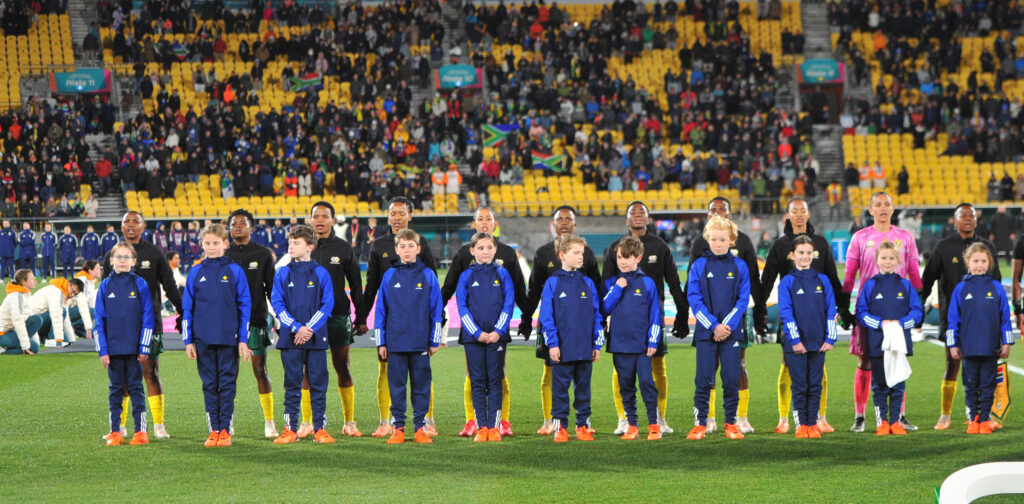
So, what did we do in the last few years for women and for women’s football? We did, of course, quite a lot. We established a strategy. You will hear it in the next two days. I don’t want to start saying something that you will hear afterwards many times.
We invested USD 1 billion in developing the game, in developing the game all over the world, the women’s game specifically targeted. For that, and in spite of COVID-19, which hit all of us, while women’s football remained alive all over the world, even in the most difficult conditions sometimes. We decided to increase the number of participating teams to the (FIFA Women’s) World Cup from 24 in France to 32 now.
I remember when we decided to do that, of course, the usual critics, which are less and less, by the way, but there are still a few, they were saying, “Well, it’s not going to work. The level is too different. You will have 15-0 scores. It will be bad for women’s football. It will be bad for the image of women’s football”.
I’m sorry, but FIFA was right. FIFA was right. As it happens quite often in the last years, FIFA was right once more.
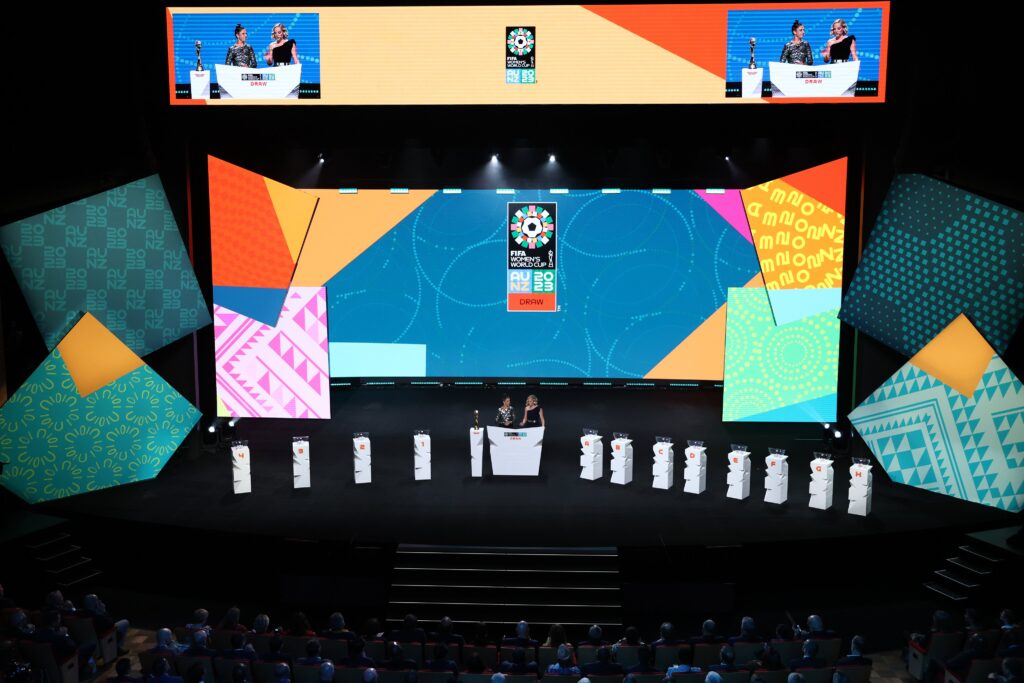
By increasing the number of teams, we had eight debutants! Eight debutants! We had many countries around the world who thought suddenly that they have a chance to participate. And from the 134 countries who entered the qualification for the 2015 (FIFA) Women’s World Cup, before I became FIFA President, we have now 188 countries in the FIFA ranking. Because everyone believes now that there is a chance to shine on the global stage.
During this (FIFA Women’s) World Cup here in Oceania, I had the great pleasure as well to visit the Oceans 11 [note: referring to the 11 Member Associations that make up OFC]. President Lambert Maltock is here and his team, our (FIFA) Council members from Oceania, Rajesh (Patel), Johanna (Wood). The Oceans 11 are the 11 member associations of OFC and of FIFA, who we wanted to be part, of course, of this celebration of the women’s game, part of this (FIFA Women’s) World Cup. And I visited all of them and they were very happy, of course, for the visit, because they live far away from everywhere and they feel sometimes marginalised, and lonely.
And football unites – (as) we have seen this in this beautiful video, it unites and doesn’t have to unite only on words, it has to unite on actions. And guess what, in all of these visits, in all of these islands where I met, of course, the federation presidents who are all here and heads of states or governments, women’s football was the top topic. And all of these countries are ranked in the 188 countries of the FIFA ranking. So, thank you, Oceania, for your great contribution to women’s football and more is to come there as well.
So, we’ve said it, “football unites the world,” but we need to do more. We have as well, we have to speak a little bit as well about the money. We have increased, of course, the contributions and prize money to USD 152 million. Also, they’re somewhere hesitating with specific recommendations for a part going to women players themselves. Well, this is simply ten times more, ten times more than the global prize money in 2015. So, in two editions, we multiplied by ten what we do. And when it comes to the level of service for the teams, the women’s national teams and the men’s national teams had exactly the same level of service in terms of training camps, hotels, travel. So, full equality has been reached.
And, again, there as well, some voices were raised, “Well, it costs too much. We don’t make enough revenues. We’ll have to subsidise.” And our opinion was, “Well, if we have to subsidise, we’ll subsidise, because we have to do that.” But, actually, this (FIFA Women’s) World Cup generated over USD 570 million in revenues. And so, we broke even. We didn’t lose any money, and we generated the second- highest income of any sport, of course, besides the men’s (FIFA) World Cup at global stage. More than half a billion. There are not many competitions, even in men’s football, that generate more than half a billion. And this shows what? This shows that our strategy probably was not too bad, that, of course, we still have to do much better, but that we are on the right path. And the lessons we learned from this (FIFA Women’s) World Cup are so many.
I can see a clock there. I think my time is over. Is my time over? I’m looking at the General Secretary. I have all the time? OK. You also have all the time? Actually, my time is over since a few minutes ago, but it doesn’t matter.
There are so many great things we can say. So, we learned many things from this (FIFA Women’s) World Cup. On the football side, of course, but also on the social and societal side. Because it’s a great thing about women’s football. It’s not just about the game on the pitch. It’s also about the social and societal messages that we can spread all over the world.
But let’s focus on the football again. 32 teams. Critics. There will be weak teams and the strong teams will be stronger, the weak ones will be weaker.

Well, teams from all six confederations have won at least a game in this (FIFA Women’s) World Cup. This never happened. Teams from five different confederations qualified for the next stage. Three African teams, for example. Congratulations! Now I wanted to tell you this before the (FIFA Women’s) World Cup, but I thought you would think I’m crazy, so I say it now. Now it’s easier.
Jamaica eliminated Brazil. South Africa eliminated Italy and Argentina. Morocco and South Korea eliminated Germany. Who would have thought that would be possible before the (FIFA Women’s) World Cup?
Well, it happened. It happened because people, women, in these countries work. They work hard and they believe that they can change the world, they can change their world. But they did it, so you have to continue to believe and heavyweights of football of the past, well, they have to come better and become better if they want to continue to compete as well in the future.
Now, in 2019, we said already that it was a (FIFA Women’s) World Cup which had a big impact. And it was a (FIFA Women’s) World Cup which had a big impact. Over a million spectators in the stadiums. Over 1 billion viewers on TV. It was a turning point for women’s football, but this (FIFA Women’s) World Cup here has been truly transformational, not only in Australia, dear Minister, or in New Zealand, but all over the world.
Of course, in the host countries we had, with the two finals tomorrow and the day after, almost 2 million viewers, 1.9 (million) something. Let’s squeeze a bit more in so we get the 2 million. Two million viewers. Two million spectators in the stadiums. Full houses everywhere and 2 billion all over the world watching the (FIFA) Women’s World Cup, and not watching just their own country, but watching the (FIFA Women’s) World Cup, because it’s an event (where) I don’t just watch my team because some local media make a bit of noise about some players in the local team, so let’s have a look. I watch the (FIFA Women’s) World Cup because it’s great. Because it’s a great sport, because it’s entertaining, because people, they love it.
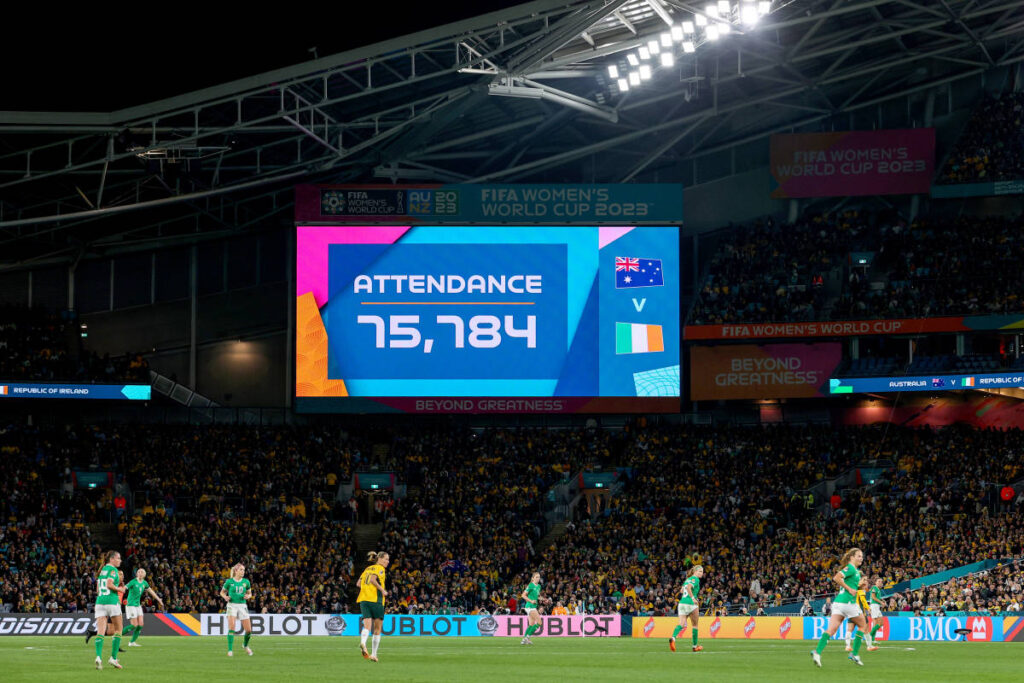
Many records were smashed. The Australia-England match the other night has broken all records in Australia ever on anything that was watched on TV since the beginning of recording and more than the moon landing or whatever else, I think. But this says something. The (FIFA) Fan Festivals, I attended one of the games there. I mean, incredible, we had over 650,000 people in the (FIFA) Fan Festivals all over Australia and New Zealand. The restaurants, the pubs, everything was full, and people were not just sitting and eating and watching their phones, but they were sharing an emotion together. In the fan festivals, in the pubs and the restaurants, they were watching the games and sharing emotions and there is nothing more beautiful than that.
So, the pledge for the future, looking at all these figures, and in some of these countries the women’s teams have even beaten the men’s teams at the (FIFA) World Cup in Qatar in terms of audiences. And also, there when we were speaking about it, before the beginning of the (FIFA Women’s) World Cup, we heard some critical voices but now, we see the audiences.
So, the pledge has to be to ask everyone – in terms of broadcasters, sponsors, partners – to, of course, pay a fair price to women’s football, not to the (FIFA Women’s) World Cup. The (FIFA Women’s) World Cup has already generated over (USD) 570 million, but women’s football, in general, in all the countries in all the leagues, in all the competitions – pay a fair price, show that you respect women and women’s sport, and you will see the feedback, which will be absolutely fantastic in this respect.
So, we need as well to create more competitions for women. We are planning a (FIFA Women’s) Club World Cup for women, but we need to have more local competitions. We need to have more continental competitions, international competitions, because when you see some of these beautiful stories which were written at this (FIFA Women’s) World Cup, speaking about Jamaica, I could speak about Nigeria, I could speak about Panama, and others, Colombia, of course – they have, if at all, very small leagues at (the) national level.
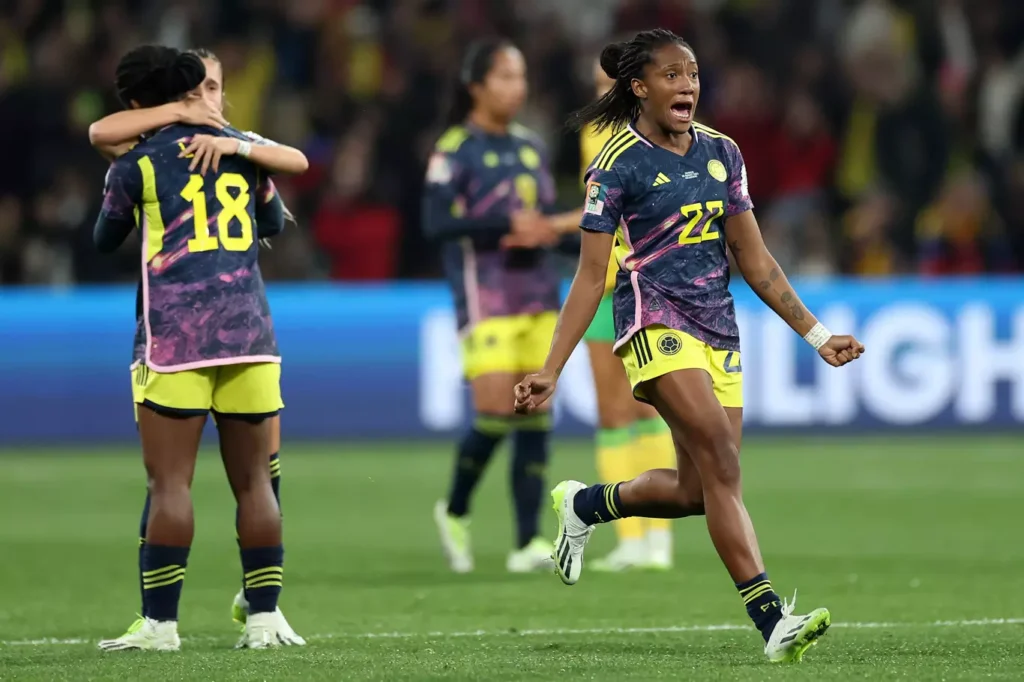
Now we can say, well, some of the big players, they will end up playing in, whatever – Chelsea (FC) or Arsenal (FC) or Real Madrid (CF), or (FC) Barcelona or (VfL) Wolfsburg or one of these teams in
Europe. Fine. But what happens to all the others? And what happens to the future? They cannot all go to play in a few clubs in Europe or in the United States, maybe, as well. We need to create the conditions in the next four years, for them to be able to play at (a) professional level at home; and this is the biggest challenge we have to take on board.
And for this, we need, of course, everyone. We need the UN agencies, who have been very, very helpful to us in this (FIFA Women’s) World Cup, participating with us.
We need the governments, we need the institutions, to create dedicated spaces for women, and for women’s sport and women’s football in particular, of course.
We need the partners, the sponsors to pay a fair price. We need the media: there are many journalists here as well to play their role, to push back home as well because it cannot be possible
that there were, I don’t know, 39 Italian journalists in Qatar [at the FIFA World Cup] where Italy did not qualify and zero in New Zealand and Australia where Italy qualified! It cannot be that there were over 30 Danish or Swiss journalists in Qatar and less than ten – even less than five – here, in Australia and New Zealand! We have to start treating men and women – or women and men – in the same way.
And, I say to all the women – and you know I have four daughters, so I have a few at home – I say to all the women that you have the power to change.
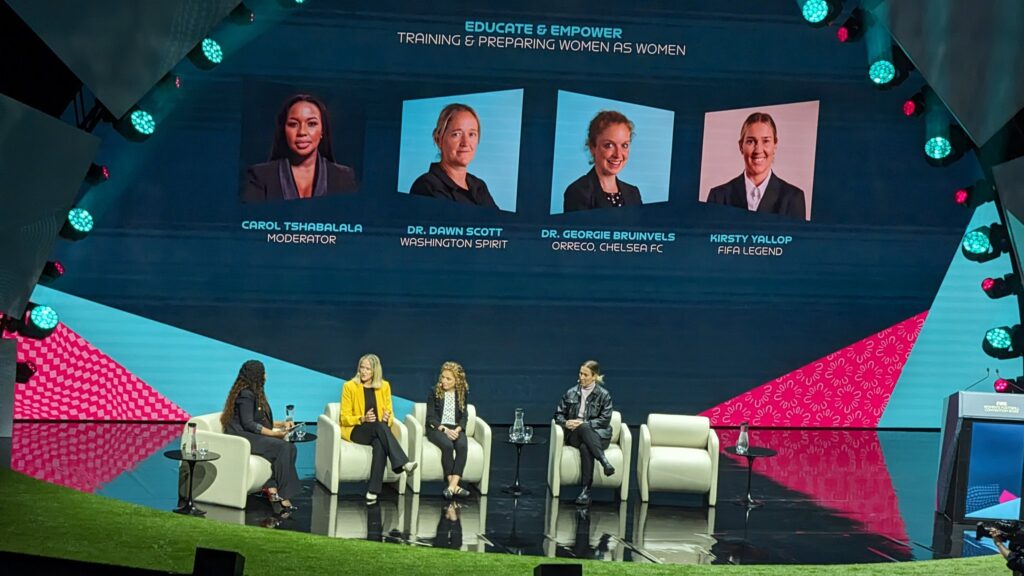
Pick the right battles, pick the right fights. You have the power to change. You have the power to convince us, men, what we have to do and what we don’t have to do. You do it, just do it. With me, with FIFA, you will find open doors. Just push the doors, they are open. And, do it also at national level in every country, at continental level, in every confederation. Just keep pushing, keep the momentum (going), keep dreaming, and let’s really go for full equality.
Not just equal pay in the (FIFA Women’s) World Cup, which is the slogan that comes up every now and then. Equal pay in the World Cup – we are going in that direction already. But, that would not solve anything. It might be a symbol, but it will not solve anything because [a World Cup is held for] one month every four years, and it’s a few players out of the thousands and thousands of players [that take part].
We need to keep the momentum, we need to push it, we need to go for equality, but we have to do it for real. And, you, here in this room – all the women in this room – you have the power to do it. So, believe in it. Thank you very much.
ENDS
